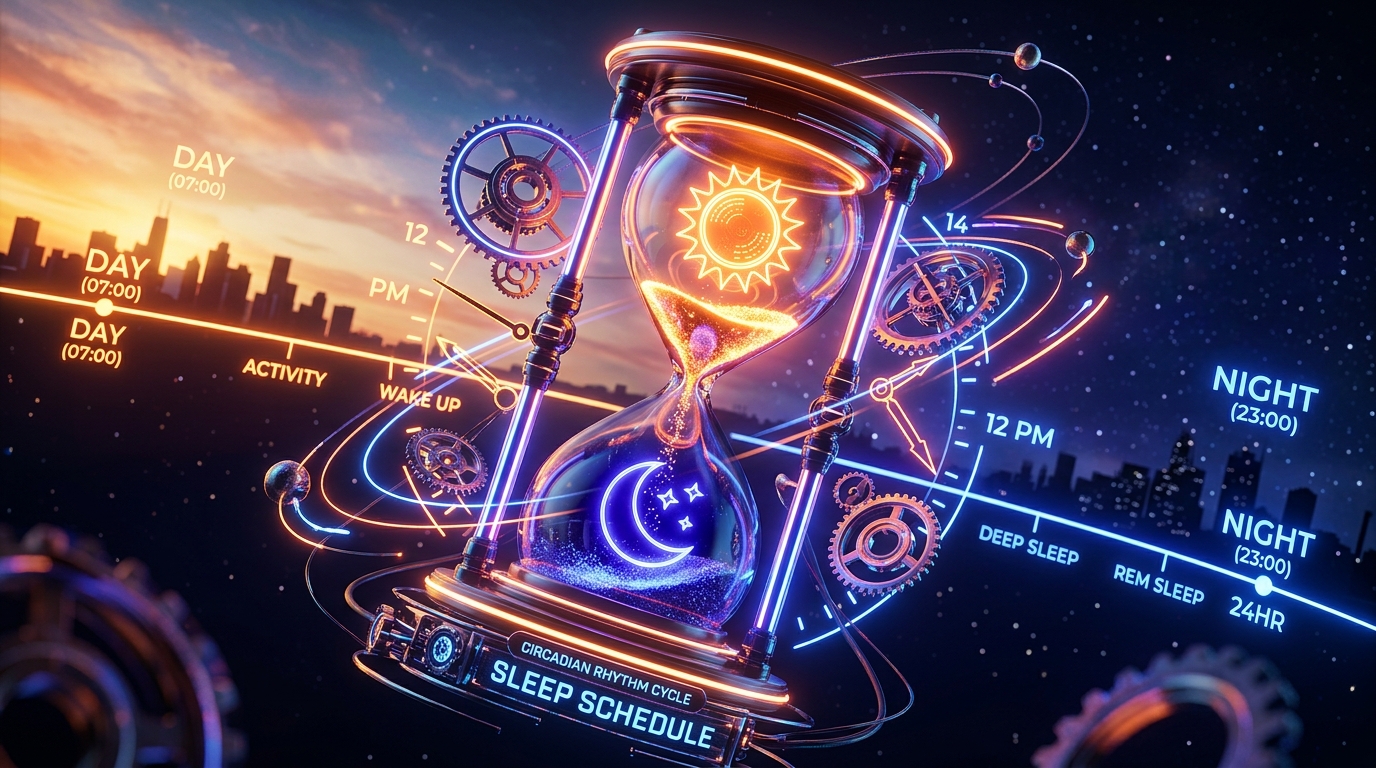
How to fix your sleep schedule fast
Domain specialist and verified guide author at HowToHub.
🎯 Quick Guide Summary & Core Answer
Here is the direct answer on how to fix your sleep schedule fast in 5 sequential steps:
⚡ TL;DR / Key Takeaways
- Follow a structured, expert-verified sequence of 5 steps to successfully fix your sleep schedule fast.
- Focus on the critical milestones: Wake up and step into sunlight—no excuses and Don’t lie awake—restrict your time in bed.
- Read the fact-checked tips and warnings to avoid common pitfalls during execution.
Step-by-Step Instructions
Wake up and step into sunlight—no excuses
Here’s the thing: your body doesn’t care what time your alarm says. It cares about light. That first burst of morning sunlight is like hitting the reset button on your brain. It tells your body, *‘Okay, this is morning now.’* And that’s not just a nice thought—it’s science. Your eyes have these special cells that soak up sunlight and kickstart a cascade of hormones, including cortisol (yes, the one everyone says is ‘bad,’ but in the morning, it’s your friend). It wakes you up and sets a timer for melatonin—your sleep hormone—to release about 16 hours later. I remember the first time I tried this after a week of late nights. I dragged myself outside at 6:30 AM, squinting in the sunlight, and within 20 minutes, I felt… awake. Not caffeine-awake, but *naturally* awake, like my body finally remembered what it was supposed to do. So here’s the deal: within 30 minutes of waking, go outside. No sunglasses, no windows—just you and the sky. Even on a cloudy day, the light is stronger than any lamp. If you wake up before sunrise, turn on bright overhead lights for 10 minutes, then get outside as soon as the sun’s up. It’s not about staring at the sun (please don’t do that); it’s about letting your eyes soak in the light like a sponge. And if you’re thinking, *‘But I’m so tired, I can’t even think about going outside,’* I get it. Start small. Even 5 minutes on your doorstep counts. Your body will thank you later when you’re not lying awake at 2 AM.
Fast for 12 hours to reset your internal clock
Your metabolism isn��t just about digestion—it’s a clock, too. And when your sleep schedule is broken, that clock is out of sync. The fix? A strategic fast. Here’s how it works: stop eating 12 to 16 hours before your *new* wake-up time. For example, if you want to wake up at 7 AM, stop eating by 4 PM the day before. Then, eat a hearty, high-protein breakfast at 7 AM sharp. This isn’t about depriving yourself; it’s about sending a clear signal to your body: *‘This is the start of my day.’* I’ll be honest—this one can feel tough at first. Your stomach might growl, and your brain might whisper, *‘Just one snack won’t hurt.’* But that’s the point. Your body is used to running on autopilot, and this fast forces it to pay attention. When you break the fast with a real meal, your metabolism shifts into gear, reinforcing your new schedule. And here’s the thing: it’s not about perfection. If you slip up and eat a little late, don’t beat yourself up. Just start again the next day. Your body is more resilient than you think. One caveat: if you have blood sugar issues or a medical condition, check with your doctor first. This isn’t a starvation diet—it’s a reset button for your internal clock.
Stop sleeping in—even on weekends
I know, I know. Weekends are for sleeping in, right? Not if you’re trying to fix your sleep schedule fast. Here’s why: every time you sleep in, you’re essentially giving yourself a mini case of jet lag. Your body doesn’t understand ‘weekends.’ It just knows that you’re suddenly shifting your schedule, and that confuses the heck out of your internal clock. I learned this the hard way. After a week of late nights, I’d sleep until noon on Saturday, only to spend Sunday night tossing and turning. By Monday, I was exhausted—again. It’s called *social jet lag*, and it’s brutal. So here’s the rule: wake up at the same time every day, within a 30-minute window. Yes, even on weekends. If you’re sleep-deprived, take a 20-minute nap in the afternoon instead of sleeping in. It’s not as fun as a lazy morning, but it’s the fastest way to get your sleep back on track. And if you’re thinking, *‘But I *need* to sleep in,’* ask yourself this: is it worth feeling groggy and out of sync for the rest of the week? Probably not. Pro tip: make your weekend wake-up time feel special. Maybe it’s a slow morning with a book, or a walk in the park. It’s not about punishment—it’s about consistency.
Dim the lights after sunset—your brain is listening
Here’s something most people don’t realize: your brain is *always* paying attention to light. Even when you’re not. And after sunset, bright lights—especially the blue glow from screens—trick your brain into thinking it’s still daytime. That’s why you can be exhausted but still wide awake at 11 PM. I used to think I was just a ‘night person’ until I realized my brain was getting mixed signals. My phone, my TV, even my bright overhead lights were telling my body, *‘Stay awake!’* So I made a change: after sunset, I switched to warm, dim lighting. No more harsh overhead lights. No more scrolling in bed. Just soft, orange-toned lamps and a screen filter that cuts out blue light. And you know what? It worked. Within a few days, I started feeling sleepy at a normal time. My body finally got the message: *‘Okay, it’s night now.’* Here’s how to do it: - Turn off bright overhead lights after sunset. Use floor lamps or table lamps with warm bulbs instead. - Install a blue-light filter on your phone and computer (most devices have one built-in). - If you *have* to use a screen, dim it as much as possible. - Try reading a book or listening to a podcast instead of watching TV before bed. It’s not about living in the dark—it’s about giving your brain the right cues. And trust me, your sleep will thank you.
Don’t lie awake—restrict your time in bed
This one sounds counterintuitive, but hear me out: if you’re struggling to fall asleep, *don’t* stay in bed tossing and turning. It’s called sleep restriction, and it’s one of the fastest ways to reset your sleep schedule. Here’s why it works: when you lie in bed awake, your brain starts associating bed with *frustration*, not sleep. Sleep restriction flips that script. By limiting your time in bed to *only* the hours you’re actually sleeping, you build up what’s called *homeostatic sleep drive*—your body’s physical need for sleep. The result? You fall asleep faster and sleep more deeply. For example, if you’re only sleeping 6 hours a night, limit your time in bed to 6 hours. That means if you want to wake up at 7 AM, you’re in bed by 1 AM—no exceptions. It’s not fun at first, but it works. Within a few days, you’ll start falling asleep almost as soon as your head hits the pillow. And here’s the key: don’t restrict your sleep to less than 5 hours. That’s just asking for trouble. Start with a realistic window, and gradually increase it as your sleep improves. I tried this after a particularly rough patch of insomnia. The first night, I was convinced it wouldn’t work. But by the third night, I was out like a light. It’s not magic—it’s biology. Your body *wants* to sleep. You just have to give it the right conditions. One last thing: if you wake up in the middle of the night and can’t fall back asleep, get up. Do something boring (like reading a book) until you feel sleepy again. It’s not about forcing sleep—it’s about training your brain to associate bed with *rest*, not stress.
Was this step-by-step guide helpful?
Your feedback helps us keep our guides accurate and clear.
📚 Authority Sources & Citations
This step-by-step guide is aligned with references and verification guidelines from the following trusted authorities: