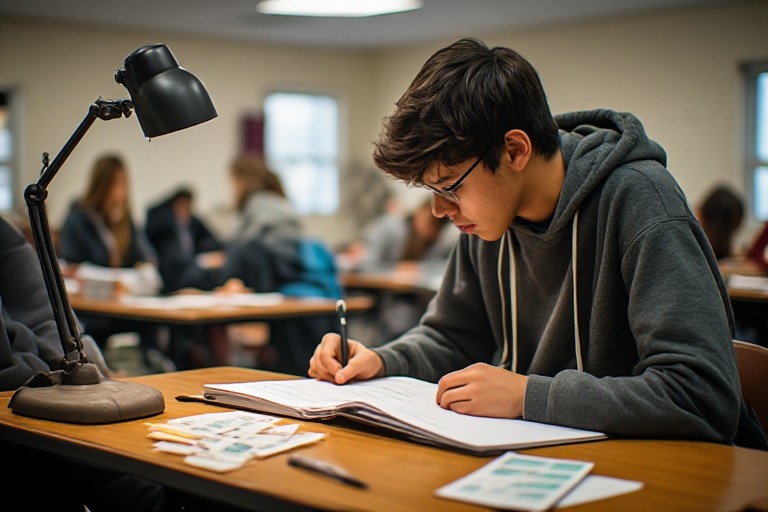
How to read faster without losing comprehension
Domain specialist and verified guide author at HowToHub.
🎯 Quick Guide Summary & Core Answer
Here is the direct answer on how to read faster without losing comprehension in 8 sequential steps:
⚡ TL;DR / Key Takeaways
- Follow a structured, expert-verified sequence of 8 steps to successfully read faster without losing comprehension.
- Focus on the critical milestones: Start with a Warm-Up and Take Strategic Breaks.
- Read the fact-checked tips and warnings to avoid common pitfalls during execution.
Step-by-Step Instructions
Start with a Warm-Up
Ever notice how your first mile of a run feels like trudging through molasses? Reading’s the same—your brain needs a warm-up. Spend 2-3 minutes skimming the text before diving in. Check headings, bolded words, or the first/last sentences of paragraphs. This primes your brain for what’s coming, like flipping through a recipe before cooking. For example, if you’re reading a news article, glance at the subheadings and the conclusion first. You’ll spot the main ideas faster, so when you read the full thing, your brain’s already connecting the dots. It’s like giving yourself a cheat sheet before the test—no, it’s not cheating, just smart prep.
Use a Pointer (Yes, Really)
Remember how you’d drag your finger under words as a kid? Turns out, that wasn’t just for show. Using a pointer—your finger, a pen, or even a bookmark—helps your eyes move faster and stay focused. Without it, your eyes tend to wander or backtrack, which slows you down. Try it with a physical book first: place the pointer under the first word of each line and glide it smoothly across. Your eyes will follow naturally, and you’ll cut down on subvocalization (that little voice in your head reading along). It feels silly at first, but it’s like training wheels for your eyes—once you get the hang of it, you won’t need it as much.
Expand Your Peripheral Vision
Your eyes can actually take in more than one word at a time—you just need to train them. Instead of focusing on each word individually, try to widen your gaze to see 3-4 words at once. Start by practicing with short phrases, like ‘the cat sat on the mat.’ Look at the middle word (‘sat’) and try to read the whole phrase without moving your eyes. It’s like switching from tunnel vision to a panoramic view. Over time, this’ll help you read chunks of text instead of word-by-word, which is a real shift for speed. Apps like Spritz or Spreeder can help you practice this with timed exercises, but you can also just use a book and a timer to track your progress.
Minimize Subvocalization
Subvocalization is that little voice in your head reading along with you, and it’s the biggest speed bump for most readers. It’s like driving with the parking brake on—you’re not gonna go fast. To reduce it, try humming lightly or chewing gum while you read. It sounds weird, but it keeps your ‘inner voice’ occupied so it can’t slow you down. Another trick? Listen to instrumental music (like lo-fi or classical) at a low volume.
Minimize Subvocalization (Continued)
The goal isn’t to eliminate subvocalization completely—you still need it for tricky or dense material—but to dial it back for easier texts. For example, you don’t need to ‘hear’ every word when reading a light novel, but you might for a philosophy textbook. Adjust as needed.
Practice with Timed Drills
Speed reading isn’t something you master overnight—it’s a skill, like playing an instrument or learning to type. Set aside 10-15 minutes a day to practice with timed drills. Grab a book or article, set a timer for 1 minute, and read as fast as you can while still understanding the gist. When the timer goes off, jot down the main points you remember. Then, repeat the same passage, trying to beat your previous time while keeping comprehension high. It’s like interval training for your brain. Over time, you’ll notice your speed creeping up without sacrificing understanding. Websites like Readwise or apps like AccelaReader can automate this for you, but a simple notebook and timer work just as well.
Prioritize Active Reading
Speed reading isn’t just about going faster—it’s about reading *smarter*. Active reading means engaging with the text instead of passively scanning it. Before you start, ask yourself: *What do I want to get out of this?* Are you looking for facts, arguments, or just the vibe? For example, if you’re reading a research paper, you might focus on the abstract, methods, and conclusion. If it’s a novel, you might zero in on dialogue or character motivations. Jot down questions or reactions in the margins (or a notebook) as you go. This keeps your brain locked in and makes it easier to recall info later. Think of it like having a conversation with the text—you wouldn’t just nod along silently, right?
Take Strategic Breaks
Your brain isn’t a machine—it needs rest to stay sharp. The Pomodoro Technique works great here: read for 25 minutes, then take a 5-minute break. During breaks, step away from the text completely. Stretch, grab a snack, or just stare out the window. This prevents burnout and gives your brain time to process what you’ve read. For example, if you’re tackling a dense textbook, those 5-minute pauses let your brain file away the info instead of feeling overwhelmed. It’s like hitting the save button on a document—you don’t wanna lose your progress. Plus, breaks make the whole process feel less like a chore and more like a rhythm. Just set a timer so you don’t accidentally scroll TikTok for an hour.
Was this step-by-step guide helpful?
Your feedback helps us keep our guides accurate and clear.
📚 Authority Sources & Citations
This step-by-step guide is aligned with references and verification guidelines from the following trusted authorities: